
Chandler Previous Resident Sources
No single roll covers every era or every person. A current parcel card is the cleanest starting point because its APN and legal description remain more stable than a mailing label. The deed index then names title holders. Printed directories and federal schedules shift the question from owners to likely occupants, while Chandler permit files date changes to the building. The best source depends on the year being studied.
| Source | Years It Covers | Where Held | What It Shows |
|---|---|---|---|
| Recorded documents | Record books to present; web cutoff unstated | Maricopa County Recorder | Transfers, liens, parties, legal description |
| Assessor parcel roll | Current and prior valuation context | Maricopa County Assessor | Owner, APN, situs, mailing address, deed link |
| Chandler directories | Verified 1955 and 1958 volumes | Arizona Memory Project | Occupant, spouse, work, phone, address |
| Federal census | Identifiable schedules through 1950 | NARA and genealogy databases | Households and nearby families |
| City permits | Varies by record system | Chandler Development Services | Project, applicant, contractor, site chronology |
Recent research normally starts online. Older Chandler previous residents may require a directory scan, a census image, a Recorder appointment, or a precise city records request. The lack of an online hit is a cue to switch channels, not proof that the record never existed.
Fix Chandler Resident Parcel Records
Enter the street address in the Maricopa County Assessor Property Search. Save the APN, owner name, property address, mailing address, subdivision or MCR number, legal description, and current deed number. The property address locates the land. The mailing address only shows where the tax notice goes. Neither field alone identifies all people in the home.
The APN and legal description keep the trail on the same land even when a street label changes. An MCR link opens the recorded map, and the deed number bridges the parcel card to the latest transfer. This first record is a dated checkpoint, not a complete list of previous residents.
Save a copy or citation with the tax year. Later updates can replace an owner name or deed link, and a bare screenshot without its effective date may blur two ownership eras. For a split parcel, also retain any suffix and the parent subdivision or map reference.
Walk Chandler Resident Deeds Backward
The Maricopa County Recorded Document Search is name-indexed. Use the present deed number first, then follow the named seller into earlier records. The Recorder keeps more than 52 million documents, but its official pages do not state one reliable first year for the web index. Keep that limit visible.
- Open the current deed and record its document number, date, grantor, grantee, and legal description.
- Search that grantor as an earlier grantee, with a date band ending before the sale.
- Compare lot, block, subdivision, APN, and legal description before accepting a match.
- Repeat the loop for each confirmed transfer and note any name or trust variant.
- When images or indexing stop, call or visit the Recorder and ask for the known instrument or older grantor-grantee index.
- Grantor and grantee
- The grantor gives an interest; the grantee receives it.
- Chain of title
- The linked sequence of transfers for the same parcel.
- Legal description
- The recorded lot, block, or land description that identifies property apart from its street name.
- Criss-cross directory
- A directory arranged by street and house number rather than only by surname.
Read Chandler Resident Deed Results
A Recorder result can show the recording number, date, document type, grantors, grantees, page count, and an unofficial image link. The image may add a return address, legal description, parcel number, and affidavit reference. A recorded instrument documents what was filed; the Recorder does not rule on legal validity or perform a title search.
Trusts, companies, HOAs, and subdivisions belong in the Business Name field. Initials and spelling variants deserve separate searches. Web viewing is free. Official copies cost $1 per page, and certification adds $3 per document. Known documents should be ordered from their result rather than through a broad administrative request.
The Recorder access page shows how the office and counter support the online trail.
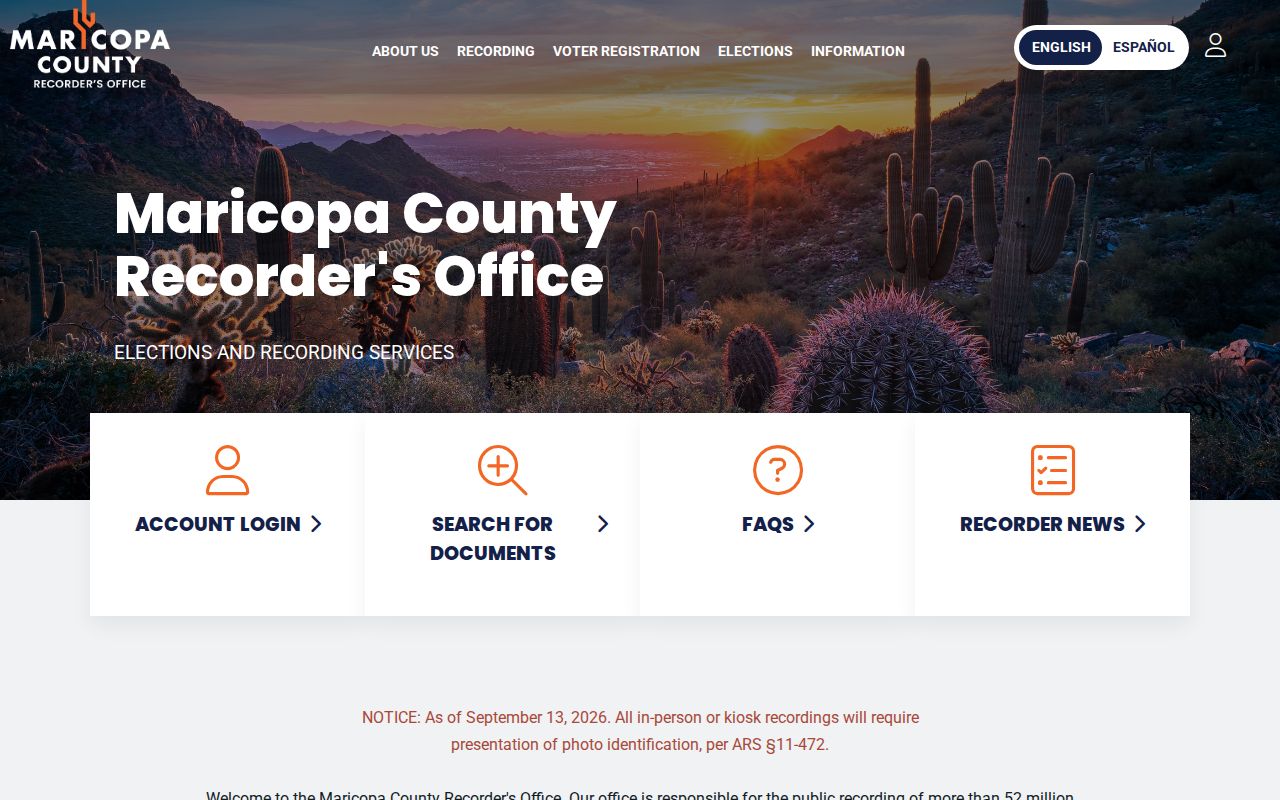
That counter route matters when a historical name index, image, or instrument cannot be reached online.
Chandler Owners Versus Previous Residents
Deeds identify parties to transfers, while the Assessor lists the owner for a tax year. Neither source supplies a full household roll. A trust may hold title. A mailing address may be a post office box or manager. Matching situs and mailing addresses is consistent with owner occupancy, but it still does not prove who else lived there.
To find past residents rather than only owners, change source types. A street section in a city directory can tie an occupant to a house number. A census schedule can show a household and neighbors. Newspapers, obituaries, probate, and permit files can connect names across the years. Each item should be labeled with its date and what it actually proves.
Pair Chandler Directories and Census
The verified Chandler anchors are the 1955 Official Annual Mesa-Tempe-Chandler Directory and the 1958 Chandler City Directory. Search the alphabetical portion for a name, then use any street section and the volume's own abbreviation key. The broader Arizona Memory Project spans nearly 400 statewide directories from 1881 through 1989, but Chandler may be buried in a combined metropolitan title.
- Record the exact printed name, spouse marker, work clue, address, and directory year.
- Check nearby editions for the first and last appearance at that address.
- Pair the entry with the 1950 census when the time and household fit.
- Compare nearby households and enumeration geography, not the name alone.
- Use deeds to separate title holders from occupants and news or obituaries to bridge gaps.
The collections and entry conventions receive fuller treatment in the Chandler city directory.
Chandler Resident Permits Date Change
Development Services records can place construction, additions, site work, or an encroachment at an address. A file may identify an owner, applicant, contractor, and project address. That evidence dates activity at the structure. It does not show that each named person lived there.
When an online project is missing, use Chandler's public-record request with the exact situs, APN if known, record type, and a useful date range. Planning maps add zoning and development context, while staff asks users to verify planning data directly. Permit chronology can also explain why an address first appears after the land itself has a much older deed history.
Chandler Resident Archive Dates
Chandler's townsite dates to 1912, while the city archive reports ordinances, resolutions, council minutes, and board minutes from 1920, election documents from 1924, and agendas from 1930. Those series can place an official, petitioner, or applicant in local events. They are not household directories.
The Chandler archive coverage page documents those dates and routes older municipal research.
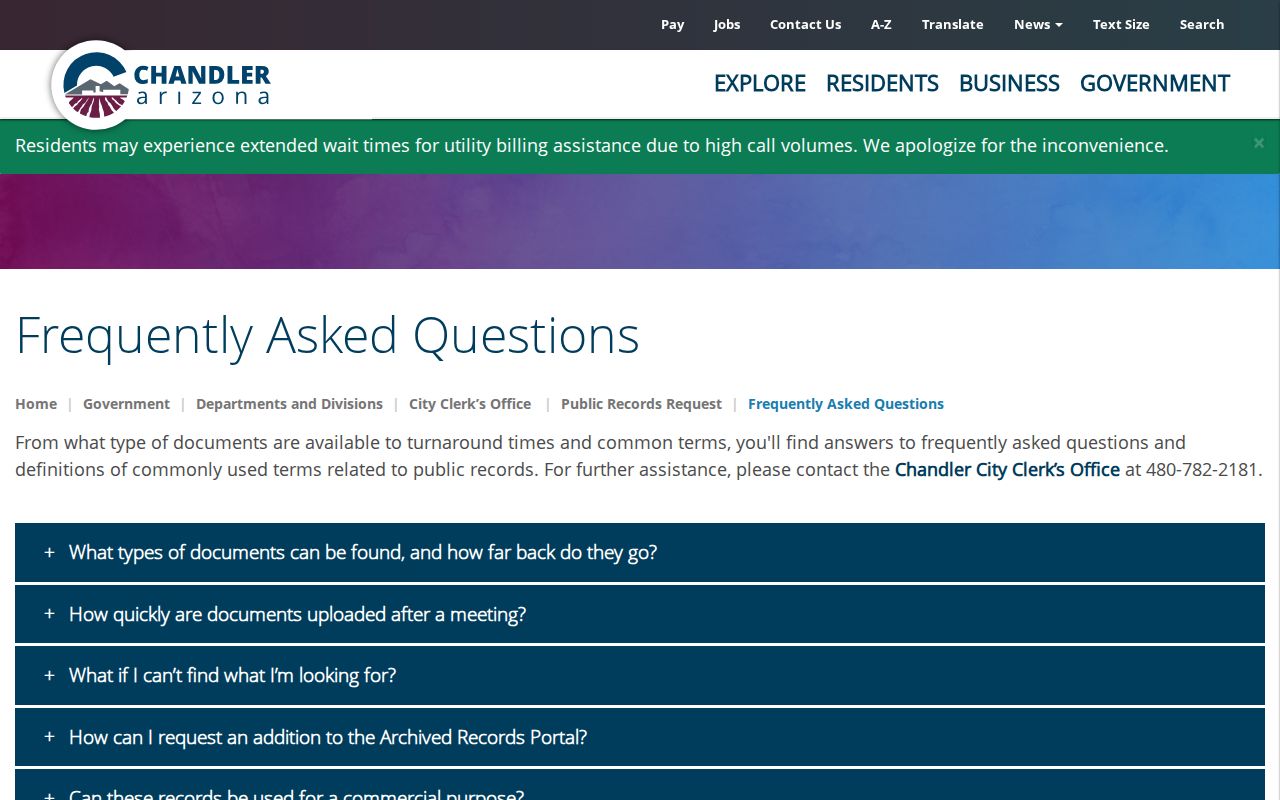
The archive can fill civic gaps while county deed and parcel records preserve the land trail.
Resolve Chandler Resident Address Traps
Chandler and Maricopa County publish separate address-block maps. Postal city, ZIP, and incorporated limits are also distinct. An annexation can change jurisdiction without changing the legal description, and a mailing address can say Chandler even when the parcel lies beyond city limits. These quirks make address text less durable than APN, subdivision, lot, and block.
No authoritative Chandler-specific Sanborn year list or complete physical reverse-directory shelf run was found in the official research. Ask the library, Chandler Museum, State Archives, or Arizona Historical Society for a specific title and year. Do not assume that a map or directory exists simply because other cities have one.
Note: Preserve every street spelling and grid variant, but accept a historical match only after the parcel or legal description agrees.
Probate Can Close the Trail
Obituaries may supply relatives, former places, and a date of death. Probate can identify a decedent, personal representative, heirs, notices, and addresses. Arizona Public Access excludes probate, so the proper fallback is the Clerk of the Superior Court in Maricopa County rather than a negative statewide search.
The Maricopa Judicial Branch records page explains the custodian route.
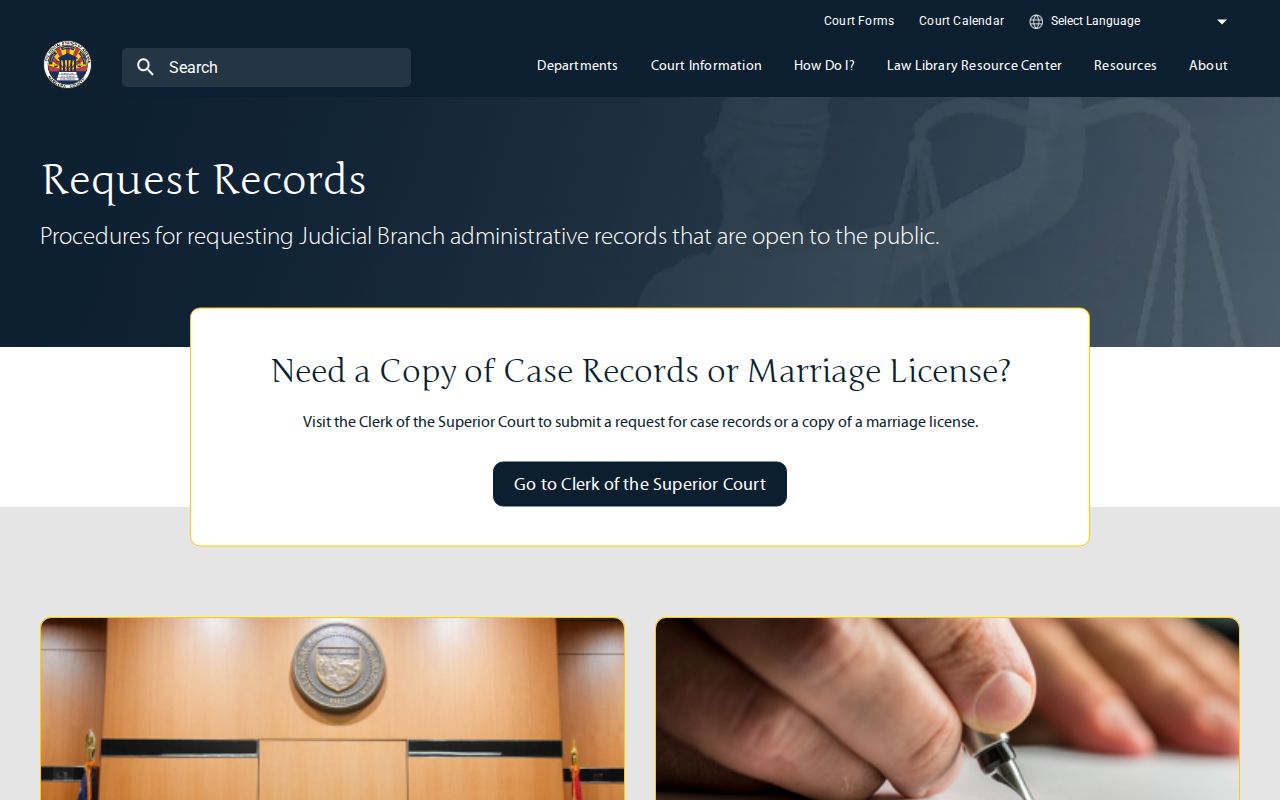
Use probate and obituary evidence as the human endpoint of a documented property and directory trail, not as a substitute for parcel identity.
Use Chandler History Lawfully
Previous-resident research works best for house history, genealogy, estate questions, and understanding how a Chandler block changed. Record each source date and distinguish owners, occupants, applicants, heirs, and mailing contacts. A person named in one old document should never be presented as a current resident.
Public access is not permission to track or pressure a living person. Arizona law can punish stalking and harassment, while protected voter and address programs intentionally remove some location data. Respect those limits and seek certified records only from the responsible custodian.
Keep a compact source log with the address form used, APN, legal description, record date, document number, repository, and access date. That log makes conflicts visible. It also prevents a later researcher from mistaking an owner, heir, permit applicant, or tax-mail contact for one of the previous residents of the Chandler home.
Lawful use. Use Chandler previous residents records for legitimate personal research, never to stalk, harass, intimidate, or expose anyone.